
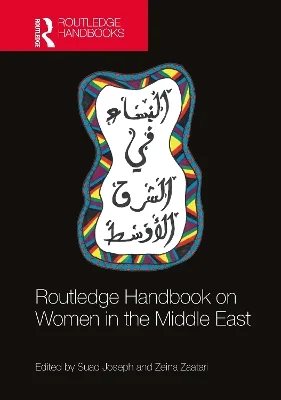
Description
Edited by Joseph Suad; Edited by Zaatari, Zeina
Short /annotation
The Handbook provides an overview of the key historical, social, economic, political, religious, and cultural issues which have shaped the conditions and status of women in the ME. It will be of interest to gender/women’s studies, pre-Islamic/post-Colonial, feminist, socio-political & socio-economic studies.
The Routledge Handbook on Women in the Middle East provides an overview of the key historical, social, economic, political, religious, and cultural issues which have shaped the conditions and status of women in the region.
The book is divided into eleven thematic sections, providing a comprehensive guide to understanding the current and historical contexts of women in the Middle East, each giving ground-breaking insights into various aspects of women’s movements:
- The importance of historical context, including pre-Islamic through post-colonial histories
- The importance of politics and the state in understanding women in the ME
- Women’s roles in political and social movements
- The impacts of the formal and informal economies and education on women of the region
- Women’s spaces and the creation of publics and counterpublics
- The effects of war, displacement, and other forms of gendered violence
- Women, family, and the state
- Discourses and practices of religion
- Women and health practices
- Bodies and sexualities
- Women and sites of cultural production
A unique overview of cutting-edge research in the key arenas of pre-Islamic to post-colonial histories, this Handbook will affect the way future generations of scholars engage with and add to the vast repository of socio-political studies of the Middle East. It will thus be of interest to researchers in gender studies, women’s studies, pre-Islamic and post-colonial studies, feminist studies, and socio-political and socio-economic studies.
Table of contents
Preface and Acknowledgements; Introduction
Pre-Islamic Through Post-Colonial Histories 1. Women in the Ancient Middle East; 2. Women in Islamic Middle East; 3. Women of the Middle East in the Colonial and Postcolonial Eras
Politics and the State 4. Women and Citizenship; 5. Women’s Political Participation in the Middle East; 6. The Gendering of U.S. Refugee Subjects in the Middle East; 7. Securitized Masculinities: Europe’s Muslims and Middle Eastern Diasporas after 9/11; 8. The Body and Revolution in the Middle East
Family, Law, and the State 9. Family and the State; 10. Islamic Family Law; 11. Activism, Gender, Transparency, and Family Law: Linking Efforts in Family Law Reform with Anti-Corruption, Transparency, and Accountability; 12. Women and Marriage in the Middle East
Political and Social Movements 13. Women and Revolution in the Middle East; 14. Political Transformations, Protests, (Counter)revolutions, and Body Politics in the Middle East; 15. Women’s Movements in the Middle East: From Feminist Consciousness to Intersectional Feminism and Everything in Between; 16. Women in Middle East Revolutions and States’ Gendered Responses
Discourses and Practices of Religion 17. The Religious/Secular Binary In Women’s Islamic Activism: A Critical Feminist Epistemology; 18. Religious Practices of Muslim Women in the Middle East; 19. Middle Eastern Jewish Women and Religion
Economy and Education 20. Women’s Economic Empowerment and Development in the Middle East; 21. Women and the Informal Economy; 22. Migrant Domestic Work in the Middle East; 23. Gender and Consumerism in the Middle East; 24. Women and/in Higher Education in the Middle East: Past and Present
Counter/Publics 25. Women, Journalis



Reviews
There are no reviews yet.