
Description
By (author) Bronner Stephen Eric
:
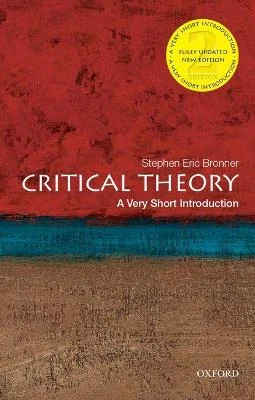
Critical theory emerged in the 1920s from the work of the Frankfurt School, the circle of German-Jewish academics who sought to diagnose — and, if at all possible, cure — the ills of society, particularly fascism and capitalism. In this book, Stephen Eric Bronner provides sketches of leading representatives of the critical tradition (such as George Lukács and Ernst Bloch, Theodor Adorno and Walter Benjamin, Herbert Marcuse and Jurgen Habermas) as well as many of its seminal texts and empirical investigations. This Very Short Introduction sheds light on the cluster of concepts and themes that set critical theory apart from its more traditional philosophical competitors. Bronner explains and discusses concepts such as method and agency, alienation and reification, the culture industry and repressive tolerance, non-identity and utopia. He argues for the introduction of new categories and perspectives for illuminating the obstacles to progressive change and focusing upon hidden transformative possibilities. In this newly updated second edition, Bronner targets new academic interests, broadens his argument, and adapts it to a global society amid the resurgence of right-wing politics and neo-fascist movements.ABOUT THE SERIES: The Very Short Introductions series from Oxford University Press contains hundreds of titles in almost every subject area. These pocket-sized books are the perfect way to get ahead in a new subject quickly. Our expert authors combine facts, analysis, perspective, new ideas, and enthusiasm to make interesting and challenging topics highly readable.
Table of contents:
List of IllustrationsPrefaceIntroduction: What is critical theory?Chapter 1: The Frankfurt SchoolChapter 2: A matter of methodChapter 3: Critical theory and modernismChapter 4: Alienation and reification Chapter 5: Enlightened illusions Chapter 6: The utopian laboratory Chapter 7: The happy consciousnessChapter 8: The great refusalChapter 9: From resignation to renewalChapter 10: Unfinished tasksReferencesFurther ReadingIndex
Review quote:
This is the only book of its kind: it”s a readable, yet expertly crafted, tour through the Frankfurt School, along with a forceful account of why the Frankfurt School of Critical Theory still matters a decade into the new millennium. I can”t recommend it highly enough.
Review quote:
The book”s forthright critique and call to transformation are a breath of fresh air.
Biographical note:
Stephen Eric Bronner is the Board of Governors Professor at Rutgers University. He is also Director of Global Relations and on the Executive Committee of the UNESCO Chair for Genocide Prevention at the Center for the Study of Genocide and Human Rights. His writings have been translated into more than a dozen languages.
Review quote: previous edition:
“This is the only book of its kind: it”s a readable, yet expertly crafted, tour through the Frankfurt School, along with a forceful account of why the Frankfurt School of Critical Theory still matters a decade into the new millennium. I can”t recommend it highly enough.” –Jeffrey T. Nealon, professor of English, Penn State University; co-editor of Rethinking the Frankfurt School”The book”s forthright critique and call to transformation are a breath of fresh air.”– Joan Braune, Philosophy in Review
Publisher”s notice:
Stephen Eric Bronner is Board of Governors Professor at Rutgers University. He is also Director of Global Relations and on the Executive Committee of the UNESCO Chair for Genocide Prevention at the Center for the Study of Genocide and Human Rights. His writings have been translated into more than a dozen languages.
Version history:
Selling point: An elegant and precise synthesis of the history of critical theorySelling point: Explores the contributions of a ga



Reviews
There are no reviews yet.