
Description
By (author) Null Wesley; Foreword by Bohan, Chara Haeussler
:
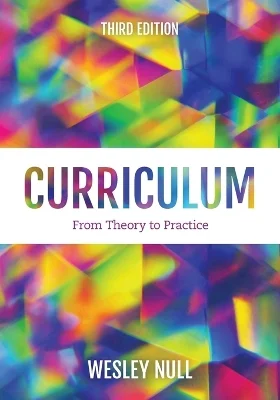
This updated third edition of Curriculum: From Theory to Practice provides an introduction to curriculum theory and how it relates to classroom practice. Wesley Null builds upon recent developments while at the same time continuing to provide a unique organization of the curriculum field into five traditions: systematic, existential, radical, pragmatic, and deliberative. Null discusses the philosophical foundations of curriculum as well as historical and contemporary figures who have shaped each curriculum tradition. To ensure breadth and scope, Null has expanded this third edition to include figures not present in previous editions, address rapid changes in democratic society, and chart a path to inclusion and wise decision making.
Additionally, after a chapter on each of the five perspectives, Null presents case studies that describe realistic and specific curriculum problems that commonly arise within educational institutions at all levels. Scholars and practitioners alike are given opportunities to practice resolving curriculum problems through deliberation. Each case study focuses on a critical issue such as the implementation of curriculum standards, the attempt to reform core curriculum within universities, and the complex practice of curriculum making. In the final chapter, Null offers a vision for the curriculum field that connects curriculum deliberation with recent developments in moral philosophy.
Review quote:
Wesley Null’s latest edition of Curriculum: From Theory to Practice represents a reawakening of the critically important work of curriculum development—work that largely looks to make improvements to the institution of schooling in the interest of lifting the lives of school children and strengthening the bonds of democracy. Given the manner in which the modern-day curriculum studies community has cast the idea of the normative as delimiting and hegemonic (and the proclivity that it has shown to view the institutional structure of the school as fundamentally imperialistic), it is refreshing to encounter the progressive tones of Null’s work, including the manner in which he favors the deliberative tradition of curriculum work that valorizes local voice, cautions against the promotion of universally-valid interventions, and invokes the organic consideration of the teacher, the learner, and the subject matter in the creation of an educational experience.
Review quote:
Just when the study of curriculum has all but vanished and those remaining have pursued other interests or jobs, along comes this elegant book, Curriculum: From Theory to Practice, which Wesley Null has significantly revised for its third edition. In an even-handed way, he presents the five curriculum traditions and illuminates where they potentially intersect. The linking of these traditions to liberal education—indeed, to democracy—makes this volume one that readers will cherish in the years to come.
Review quote:
In the new, third edition of Curriculum, Wesley Null portrays curriculum theory as a salient guide to practice in schools. He shows how six curriculum theory postures (liberal, systematic, existentialist, radical, pragmatic, and deliberative) speak to both historical educational dilemmas and recent threats to democracy that plague the world. While Null sees valuable attributes in each tradition, he advocates for the deliberative as the most insightful and effective. Unlike many other curriculum scholars who hold that whole societies or cultures embody curricula, Null’s focus is clearly addressed to those who pursue practical school improvement: curriculum leaders, policymakers, teachers, and teacher educators. He includes sections that enable them to address everyday dilemmas faced over standards, core curricula, teacher education, and matters of virtue vis-à-vis delibe


Reviews
There are no reviews yet.