
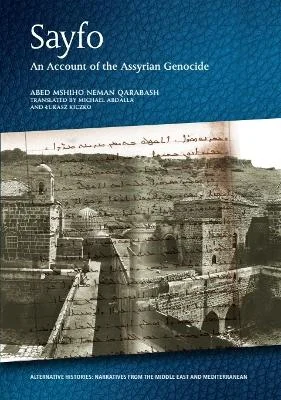
Description
By (author) Qarabash, Abed Mshiho Neman; Translated by Abdalla, Michael; Translated by Kiczko, Łukasz
Short /annotation:
This text is one of the few surviving eyewitness sources on the Assyrian genocide during the First World War, written by a seminarian living in greater Tur Abdin (the southeast of today’s Turkish state). It is translated and annotated by a master of Syriac with an in-depth knowledge of modern Assyrian history.
:
Translates and annotates a rare eyewitness account of the 1915 Assyrian genocide during the First World WarSet in the context of the failing Ottoman state and rising Young Turk regimeDiscusses Armenians and Greeks as well as Assyrians in one primary sourceIncludes comments and interviews with perpetrators of eventsAnnotated with information about sites, people and eventsThis text is one of the few surviving eyewitness sources on the Assyrian genocide, written by a seminarian living in greater Tur Abdin (the southeast of today”s Turkish state). The perspective is one that is little known and less discussed. Translated and annotated by a master of Syriac with an in-depth knowledge of modern Assyrian history, this text creates a unique opportunity for new and progressive scholarship. The Assyrian genocide is one of the forgotten atrocities of the 20th century. The physical destruction was but one element; it also caused demographic shifts, loss of territory, generational trauma and linguicide, along with cultural genocide/ethnocide and identity erosion.
:
This text is one of the few surviving eyewitness sources on the Assyrian genocide, written by a seminarian living in greater Tur Abdin (the southeast of today’s Turkish state). The perspective is one that is little known and less discussed. Translated and annotated by a master of Syriac with an in-depth knowledge of modern Assyrian history, this text creates a unique opportunity for new and progressive scholarship. The Assyrian genocide is one of the forgotten atrocities of the 20th century. The physical destruction was but one element; it also caused demographic shifts, loss of territory, generational trauma and linguicide, along with cultural genocide/ethnocide and identity erosion.
Table of contents:
PrefaceAbout the Diary and AuthorBackground of the RegionDiary of a SeminarianFrom the AuthorThe Emergence and Spread of ChristianityDifficult times: Persecution Suffered by Christianity in Various Periods of HistoryPersecution in the Most Recent Times – the end of the 19th CenturyThe year 1914 – The beginning of the World War IMy diaryEyewitness reports: The story of a road worker named Abed Mshiho, who saw the mostThe Christians of the city of Amida and its subordinate villages – executions and the exodus of the year 1915Extermination of Christians in the villages of the district of Mardin in the year 1914The Sinjar Mountains suffer for ChristiansThe fate of Christian inhabitants of other localitiesPositive and negative attitudes of some participants of the exterminationsBibliographyAnnexes 1–3
Review quote:
Western society is increasingly interested in being acquainted with the historical reality of the great tragedies of humanity. This has been one of the worst after the massive holocaust of the Jews during the Nazi era. Therefore, this work can be considered a significant contribution to the subject.
Biographical note:
Michael Abdalla is an Associate Professor in the Institute of Cultural Studies at Adam Mickiewicz University, Poland. He has published books in Polish and in Arabic. Łukasz Kiczko is a professional translator
Feature:
Set in the context of the failing Ottoman state and rising Young Turk regime
Feature:
Discusses Armenians and Greeks as well as Assyrians in one primary source
Feature:
Includes comments and interviews wi


Reviews
There are no reviews yet.