
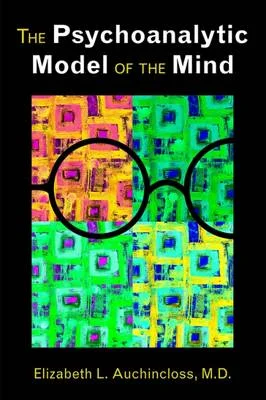
Description
By (author) Auchincloss, Elizabeth L.
Review quote:
This is a good starting point for someone new to the field or a great assistance in systematising one”s knowledge. It has a clear style, measured approach, cautious and accurate approach to scientific modelling and awareness of its limitations and aims. Interesting and accurate attempt to bring together various concepts within the field that is notorious for its lack of common ground and subjectivity. BMA Medical Book Awards 2016
Primary cover copy:
Written for students at every level of training, including psychiatry residents, psychology graduate students, social work students, and medical students, The Psychoanalytic Model of the Mind explains how the psychoanalytic model works and how it contributes to the care of people with mental illness. The book is founded on the psychoanalytic thinking that evolved over the last 120 years and surveys how the psychoanalytic model has become the basis for almost all psychological treatments, or “talking cures,” for emotional suffering.In plain and accessible language, the author outlines the history of psychoanalysis, answers basic questions, defines the core dimensions of psychodynamic models, and illustrates their clinical utility. The Psychoanalytic Model of the Mind explores the most complex model of mental functioning ever formulated for clinical purposes and demonstrates that this model is useful in treating all patients, all of the time.
Endorsement:
Elizabeth Auchincloss has done a great service to all of us in the mental health field. She has provided a systematic examination of the current thinking about the various psychoanalytic paradigms in use today. In so doing, she provides students, as well as experienced clinicians, an up-to-the-minute account of the term “psychoanalytic” as used in our contemporary era of psychoanalytic pluralism. Her prose style is scholarly and precise but easy to follow. I highly recommend this superb new volume to all mental health professionals.
Endorsement:
Elizabeth Auchincloss is a psychoanalyst, a teacher and an educator, but most of all, a skilled clinician. Like all skilled therapists, she knows how to use psychoanalytic theory, which is to learn it thoroughly, understand it, and then employ it with patients as it is useful. Auchincloss does a masterful job of introducing the theory, telling its story (one imagines much as she constructs a patient”s story) and then tracking its development through Freud”s earliest models and the subsequent elaborations of his followers up to contemporary psychoanalytic thinkers. She outlines four basic models—topography, structural, object relations, and self-psychology, provides illustrative clinical vignettes, and discusses how she integrates them, or selects among them, when working with patients. The book is a delight to read, comprehensive but clear and straightforward. For the student or practitioner who wants one book on psychoanalytic theory, this is it!

Reviews
There are no reviews yet.